

If several people edit the page, the shortlist is short. Mydrop is the only one of the six here that gives you a custom domain, shared editing with an approval step, and per-link analytics you can share without handing out a login. Carrd wins on price and design freedom if one person owns the page. Everything else is a single-seat creator tool that a team is quietly working around.
TLDR: Custom domains are common. Roles, approvals and shareable analytics are not. Decide on the second list, because that is where team tools break.
The 6 team link in bio tools, compared
| Tool | Custom domain | White label | Shared editing | Approvals | Team analytics |
|---|---|---|---|---|---|
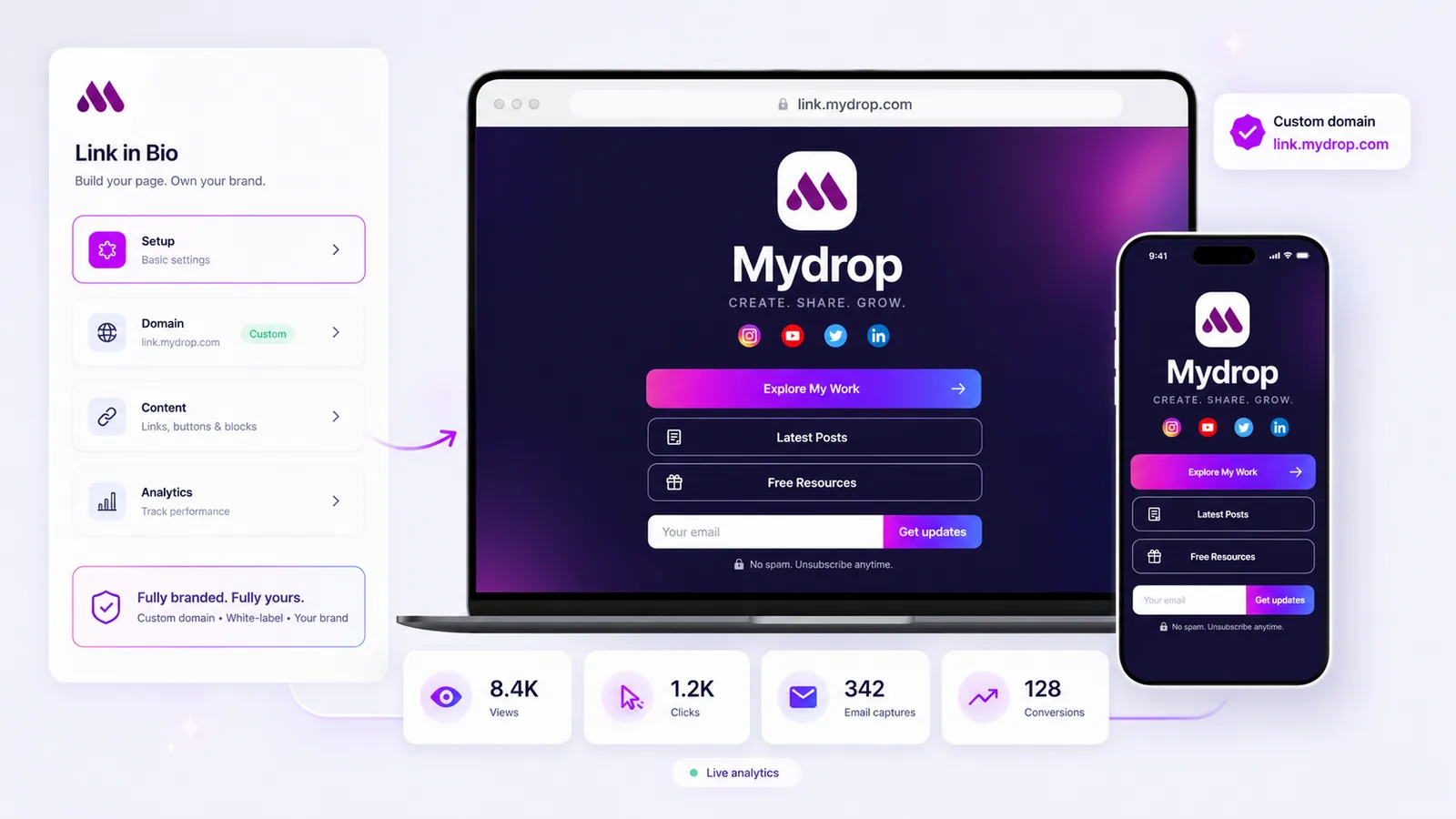
| Mydrop | Yes, managed SSL | Yes | Yes, with roles | Yes | Per link, shareable |
| Linktree | Paid tiers | Branding removal on paid | Limited | No | Page-level |
| Beacons | Paid tiers | Paid | No | No | Page-level |
| Taplink | Paid tiers | Paid | No | No | Basic |
| Bio.link | Paid tiers | Paid | No | No | Basic |
| Carrd | Yes | Yes | No | No | None built in |

Which link in bio tools offer custom domains
All six, with one distinction that matters more than the feature checkbox: whose name is on the page after the domain is connected.
- Mydrop publishes on the brand's own domain with managed SSL and no Mydrop branding anywhere on the page.
- Linktree, Beacons, Taplink and Bio.link connect a domain on their paid tiers, but removing the vendor's badge is usually a separate line on the plan. Check both.
- Carrd is your own site on your own domain by definition, because you built it.
Two practical notes. Use a subdomain like links.yourbrand.com rather than a separate domain: it inherits trust, it is one DNS record, and it keeps the page inside your brand rather than beside it. And confirm SSL is managed for you. A bio link that throws a certificate warning on a phone loses the visit outright.
Team collaboration on bio link updates and approvals
This is where most link in bio products stop being team software. One login, one editor, no history of who changed what. In practice a marketing team ends up with the password in a shared vault and a Slack thread standing in for a review process.
What a team actually needs:
- Roles, so a junior can edit without being able to repoint the primary button.
- An approval step, so a campaign link change is reviewed before it is live, the same way a post is.
- A change history, so when the wrong URL goes up on a Friday you can see when and by whom.
- No shared password, because seats are cheaper than an offboarding incident.
Mydrop runs a bio page edit through the same approval workflow as a scheduled post, which means the reviewer is already in the habit and there is no second tool to teach. If you are on a single-seat tool today, the cheapest interim fix is a rule that only one named person edits the page and everyone else requests changes in one place.
Team analytics for bio links
A single page-view number tells you nothing you can act on. The view worth having answers four questions:
- Which destination earned the click? Per-link, not per-page.
- Where did the visit come from? Instagram bio, TikTok bio, a story sticker, a newsletter. Source and UTM, carried through.
- What happened after the click? A capture, a booking, a purchase, or a bounce.
- Can a stakeholder see it without an editor seat? A share link beats a monthly screenshot.
Mydrop reports views, clicks, captures and conversions per destination and puts them beside the performance data for the posts that drove the traffic, so the bio page stops being a separate report nobody opens. If your tool only exposes a page count, export what you can each month and keep the history yourself.
Does a link in bio page help your SEO?
A little, and only on your own domain.
- On
links.yourbrand.com, the page can be indexed, can rank for your brand name, and passes visitors into your main site. It is a small, genuine win. - On a vendor's domain, every link you add builds their authority. You are renting.
- Either way, keep the page light. These pages are opened on phones on bad connections, and load time decides more clicks than copy does.
Do not expect a bio page to rank for anything competitive. Expect it to be a fast, branded, measurable doorway.
Which one to pick
- One person owns the page, design matters most, budget is tiny: Carrd.
- Creator-led brand, no review process, wants a store attached: Beacons.
- Fastest possible setup, single editor: Linktree or Bio.link.
- Several editors, a reviewer, a domain, and analytics somebody outside the team will read: Mydrop.
Running this across several client brands rather than one? The structure changes: see link in bio for agencies. Choosing the tool for a single creator account instead? Start from the 7 best link in bio tools for 2026.
Next step: connect the subdomain first, before you design anything. Everything else can be redone in an afternoon; the URL is the part you do not want to change twice.


 Google review
 Trustpilot review
 Product Hunt comment